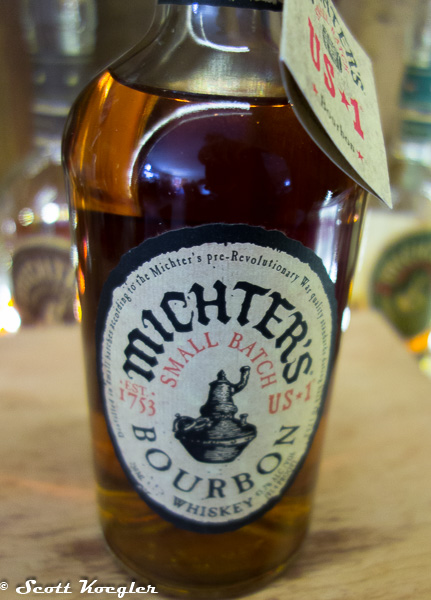
Aging Whiskey in a 1 Liter Barrel
 Have you ever opened a bottle of bourbon that you’ve been looking forward to tasting only to be disappointed? There are plenty of really great bourbons available but there are also some that need a little help in the flavor category. Personally I’d prefer to skip those since really… there are plenty of really great and proven bourbons. But I do occasionally buy one just as an experiment, thinking that I may discover some really great new bottle. What is there to do with those disappointing bottles?
If the cure to adding flavor then the obvious answer is to add more aging, right? After all, bourbons (and other whiskeys) have age statements on the bottle for a reason. The longer in the barrel the more flavor. Giving the whiskey time in contact with the oak barrel allows the wood flavors to mingle with the ‘white dog’. It imparts the darker color, the deeper notes of the wood, and overall makes for a richer taste. That’s the common wisdom behind the folks that sell those charred oak sticks that you can drop into your bottle to achieve ‘instant’ aging.
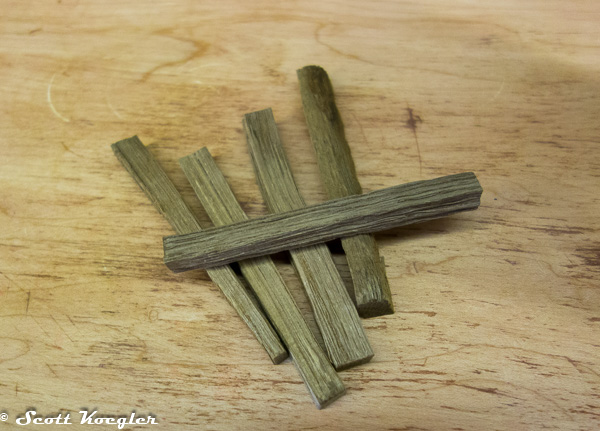
It’s also the theory behind putting your whiskey into a small barrel.
Oak Barrels Ltd. sell a series of oak barrels. They come in different sizes and a variety of hoop colors (black, galvanized, and brass). And they are exactly what you would expect from their advertising. Mine came with black hoops and is rated to hold 1 liter of liquid. It comes with a wooden stand, a bung plug, and a wooden spigot. The whole thing is well made and looks great.

The instructions say to soak the barrel with water and rinse it out a few times to remove any loose char that may have separated from the inside of the barrel during shipment. All their barrels are charred, just like their big cousins that your bourbon originally aged in. In addition to washing out any charcoal, the water needs to stay in the barrel for a day or so in order to soak into the wood staves and swell them so that they seal as they expand. My barrel was very water tight and only leaked a small amount over the 2 days I let it soak.
I then selected one of my ‘experimental’ bourbon choices (Oppidan) as the subject for this test. A note about Oppidan… I was as I indicated above, initially excited to try this bourbon. It’s a solea aged bourbon which is a bit different from the normal bourbon aging process and involves continuously adding new bourbon to a barrel that contains older bourbon. This is used very successfully in brandy aging resulting in some aging statements that go as far as 20+ years – meaning that at least some of the liquid in the barrel is 20 years old.
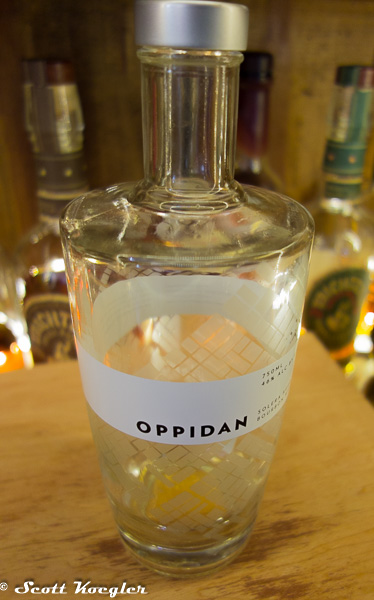
Oppidan is made in Wheeling, IL. It’s not made in Kentucky. Remember that for later.
Unfortunately for me the Oppidan tasted more like unaged bourbon, or ‘white dog’, or moonshine – however you prefer to call this taste of whiskey. So my thought was that it could benefit from some more contact with oak.
The small size of the 1 liter barrel means that the bourbon you put in it receives significantly more contact with the oak than it does in a 55 gallon barrel. And the theory is that leaving the whiskey in this small barrel accelerates the aging process and drives flavor into the whiskey quickly.
Here’s what happened
I emptied the water from the barrel and replaced it with the Oppidan. I set it on a shelf in a cool and dark area for almost 4 weeks… significantly longer than what was recommended, but hey – I thought this really needed the help of the oak. When I filled the barrel I also kept some of the Oppidan in the bottle so that I could have a control sample to compare with the final product.
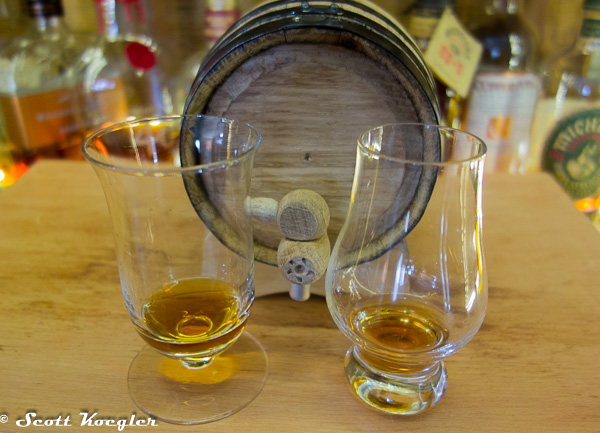
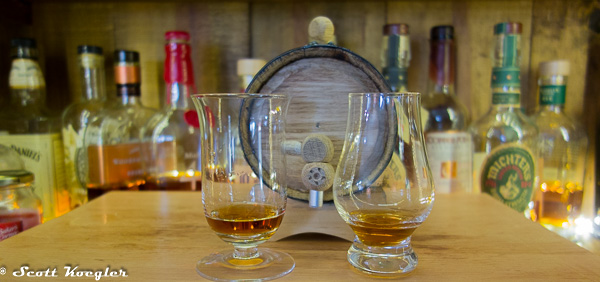
I poured some Oppidan from the barrel (the glass on the right) and some from the bottle (the glass on the left). What I found immediately interesting was that the barrel contents were actually lighter than the bottle contents – the opposite of what I expected.
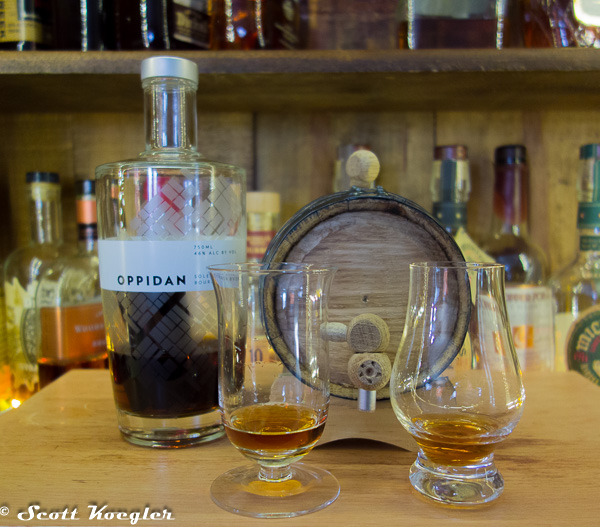
As for the success of the ‘pushed’ aging process? The Oppidan did change, but not substantially. My side-by-side taste comparison left me with much the same impression as my first sip. Both the bottle and the barrel still had a distinct white dog taste. But I did notice the barrel batch tasted slightly lighter and less harsh with a bit of oak mixed in.
In short – not at all what I was hoping for. In my evaluation it just isn’t possible to do ‘magical aging’ and turn moonshine into bourbon quickly.
Another note – the Angels are VERY thirsty. The angels’ share (that part of the contents that evaporates during the aging process) amounted to about 1/3 of what I put in. Just be prepared to loose a lot of your whiskey through the process.
My other observation, and one that will guide my future bourbon purchases is that as with wine, location does make a difference. I’ve had ‘bourbons’ from many states and none of it has the same flavor characteristics as Kentucky bourbon. The lone exception is Tennessee, and it’s very close. I’m guessing the difference has mostly to do with the limestone water and partly with the aging process and the temperature changes.
So I’ll keep the barrel as a souvenir but I don’t plan on using it to ‘age’ any whiskey in it. I’ll just buy the stuff I know I like.